Fire Damage Restoration Cost in NYC ($3,000+)
Jan 6, 2026
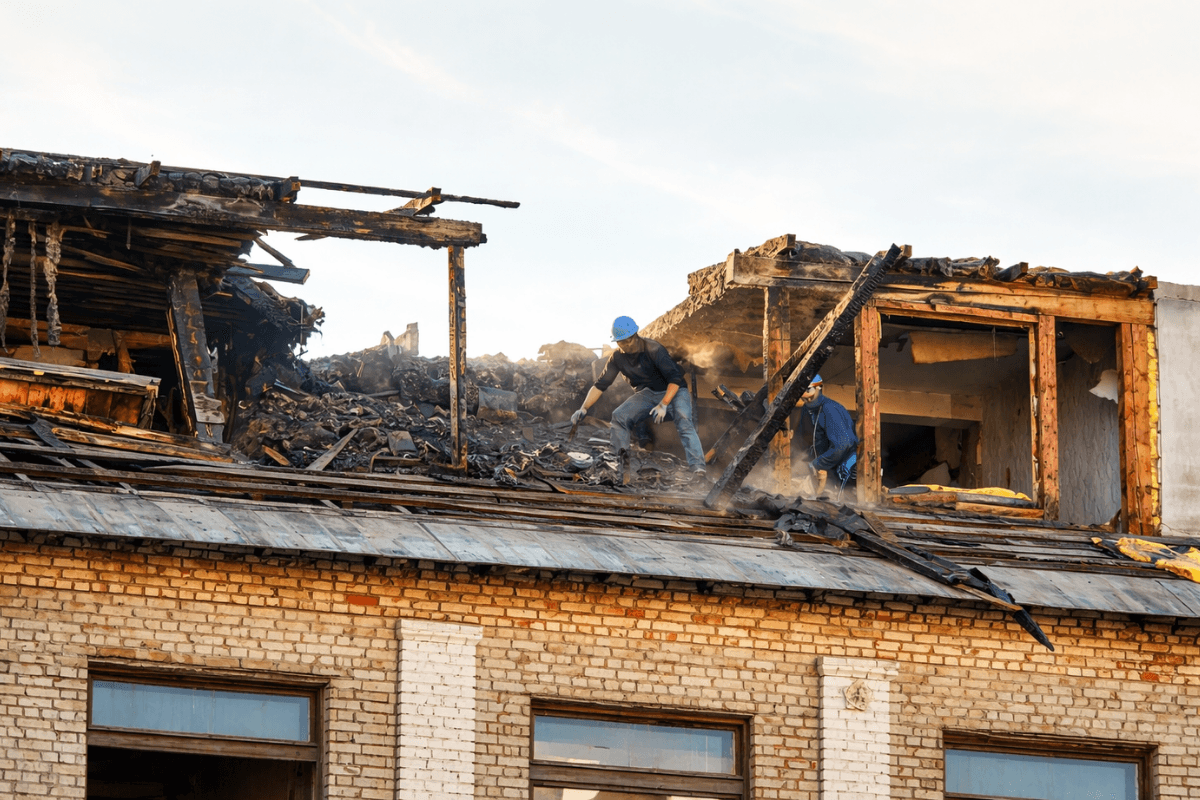
Fire damage in NYC has a way of stretching far beyond the burn mark.
What starts as a small flare-up can turn into smoke in the vents, water in the walls, and repair estimates that jump from a few thousand dollars to tens of thousands fast.
If you’re trying to make sense of what fire damage restoration cost looks like in this city, we’ll walk through realistic ranges and NYC-specific factors.
Key Notes
NYC fire restoration usually ranges from $3,000 to over $50,000 depending on severity.
Smoke, soot, water damage, and reconstruction are the biggest drivers of total cost.
NYC access, labor rates, and code requirements significantly raise project timelines and pricing.
NYC Fire Restoration Costs At A Glance
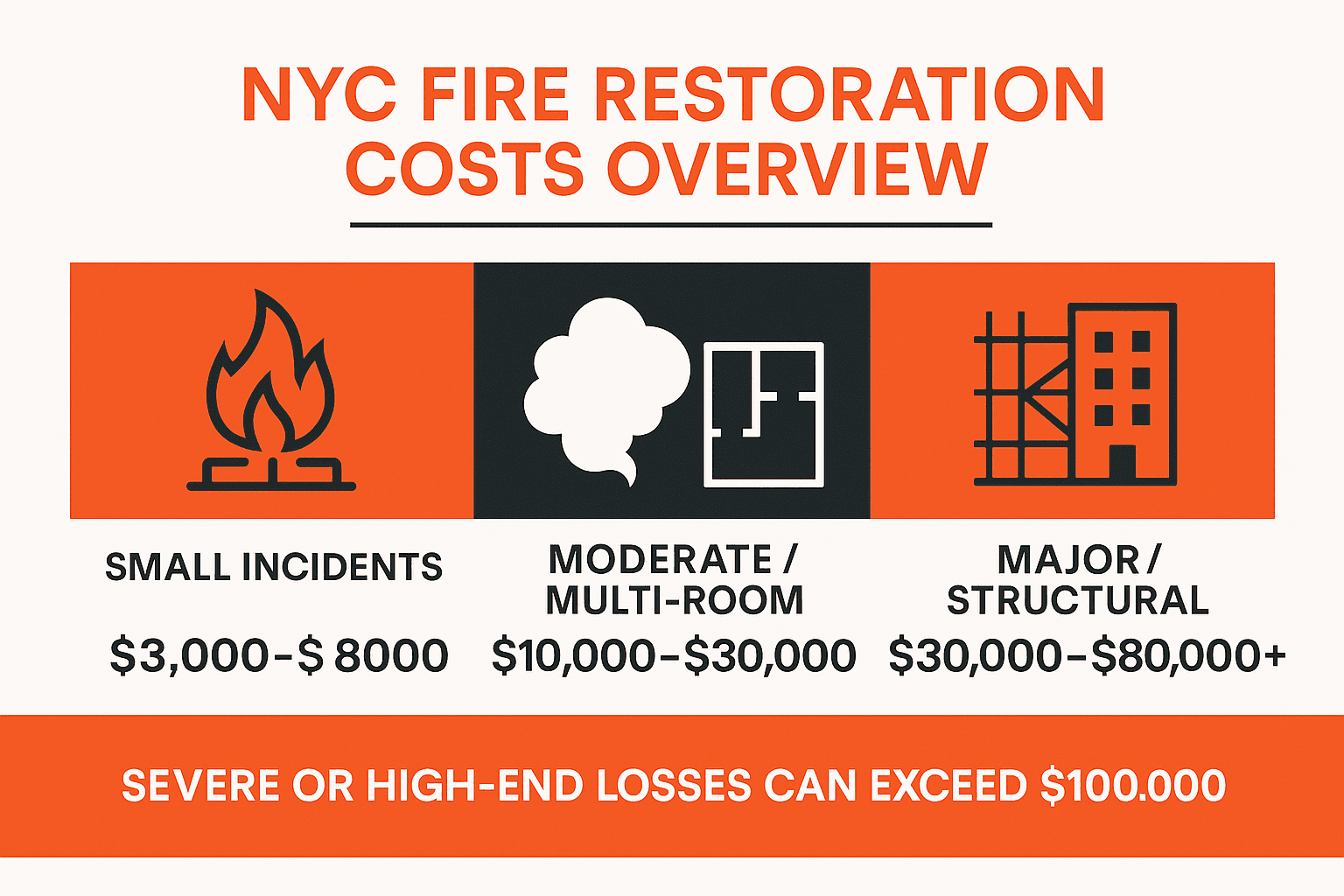
Most residential fire restoration jobs in New York land somewhere between $8,000 and $40,000, depending on how far the fire, smoke, and water traveled.
Smaller, contained incidents (like a localized kitchen flare-up) typically fall closer to $3,000–$8,000, while multi-room or structural fires can easily reach $30,000–$80,000+.
Severe losses or high-end, large apartments can move past $100,000, especially when code upgrades come into play.
Per Sq Ft Costs
Square-foot pricing only tells part of the story.
Nationally, fire restoration often averages $4–$7 per square foot, but NYC’s access challenges, after-hours rules, and labor rates often push effective rates toward $15–$16 per square foot, especially for smaller footprints.
What Fire Restoration Includes (The Full Scope)
A full fire restoration job is a structured sequence of emergency work, cleaning, demolition, and rebuilding.
Breaking it down makes it easier to understand where the time and money go:
Stabilization & Safety Measures
This is the first priority. Crews secure windows and doors, disconnect unsafe utilities, and assess structural concerns.
The goal is to stop damage from spreading and make the space safe to work in.
Even minor fires can leave compromised wiring or weakened building materials, so stabilization sets the foundation for everything that follows.
Water Removal & Structural Drying
If the fire department was involved, there’s water – sometimes a lot of it. Drying begins immediately to prevent mold growth and long-term structural problems.
Industrial dehumidifiers, air movers, and moisture mapping tools help eliminate hidden moisture in walls, floors, and ceilings.
Smoke & Soot Cleaning
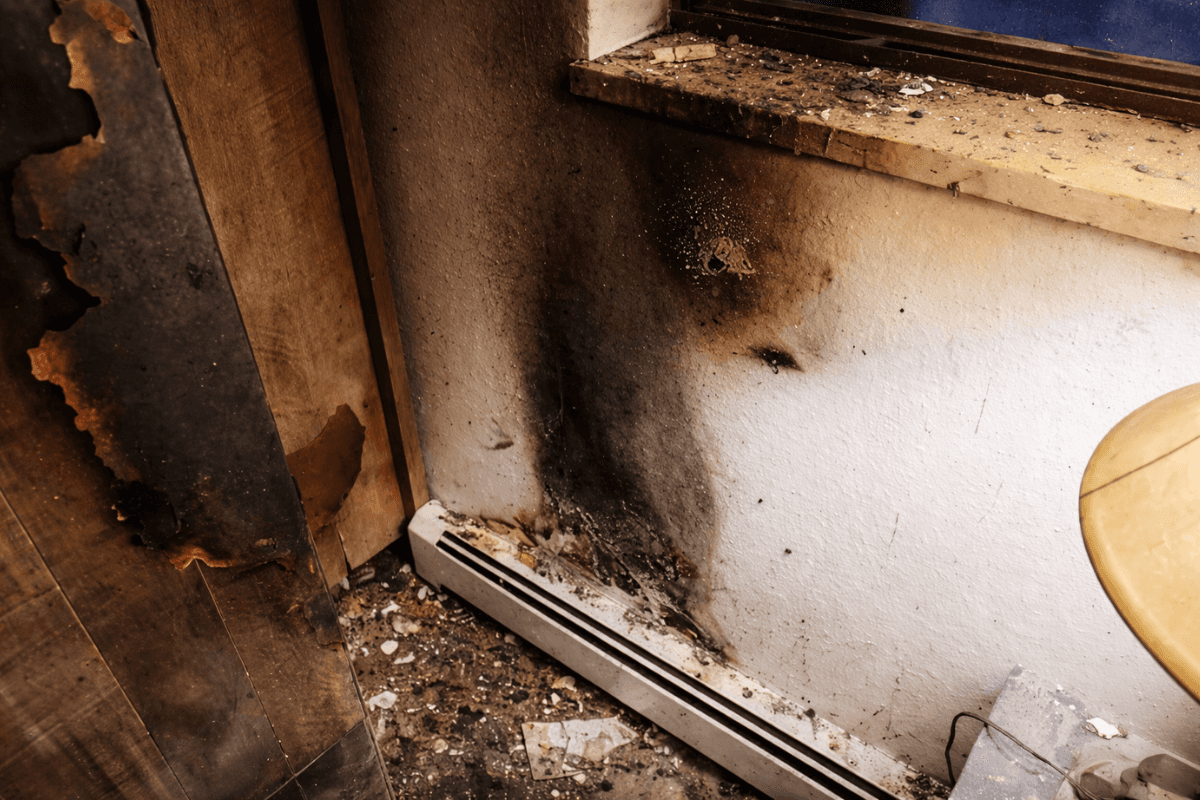
Smoke behaves like a gas and spreads far beyond the burn area. Soot clings to surfaces and embeds into porous materials.
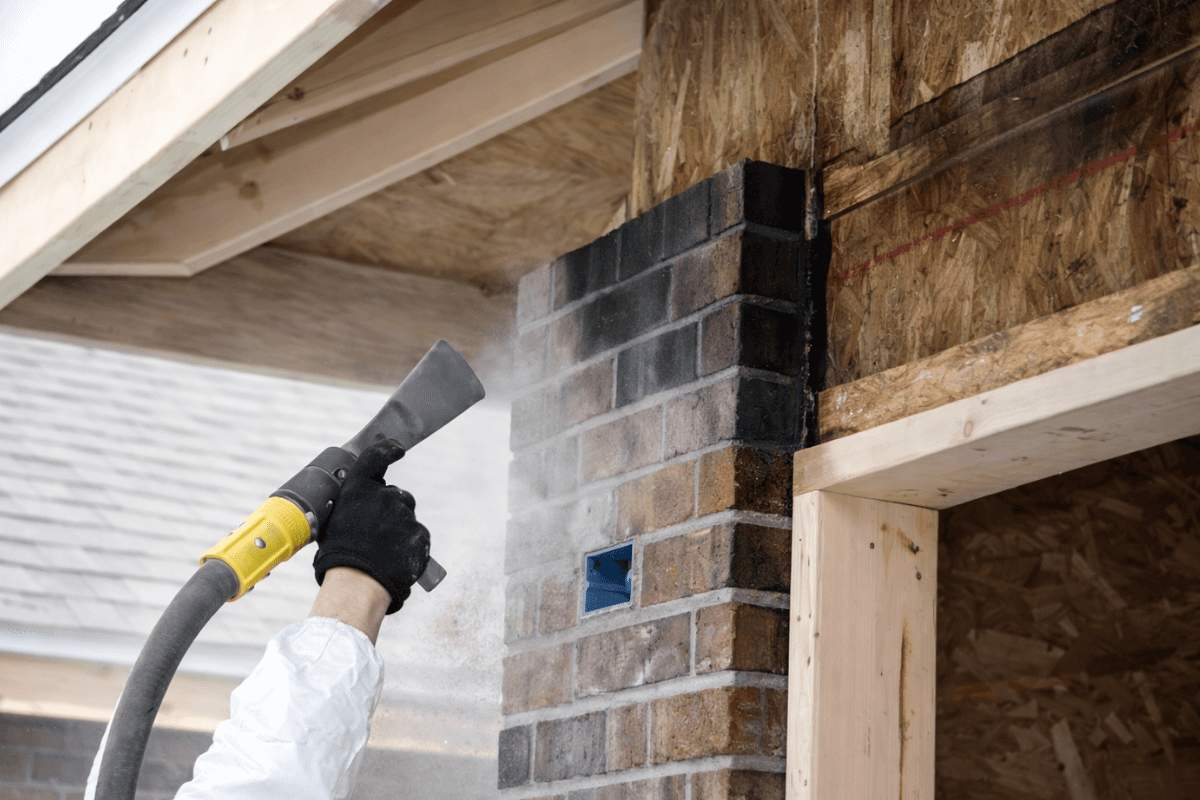
Professional cleaning typically involves HEPA vacuuming, dry chemical sponges, negative air filtration, and deodorization methods like thermal fogging or hydroxyl treatment.
Done right, it removes both visible residue and the stubborn odors that linger long after a fire.
Selective Demolition
Once cleaning is underway, crews remove damaged materials: charred framing, drywall, cabinets, flooring, and anything structurally compromised.
In larger fires, debris volume becomes its own cost driver, especially in NYC buildings with limited access or disposal restrictions.
Reconstruction & Finishes
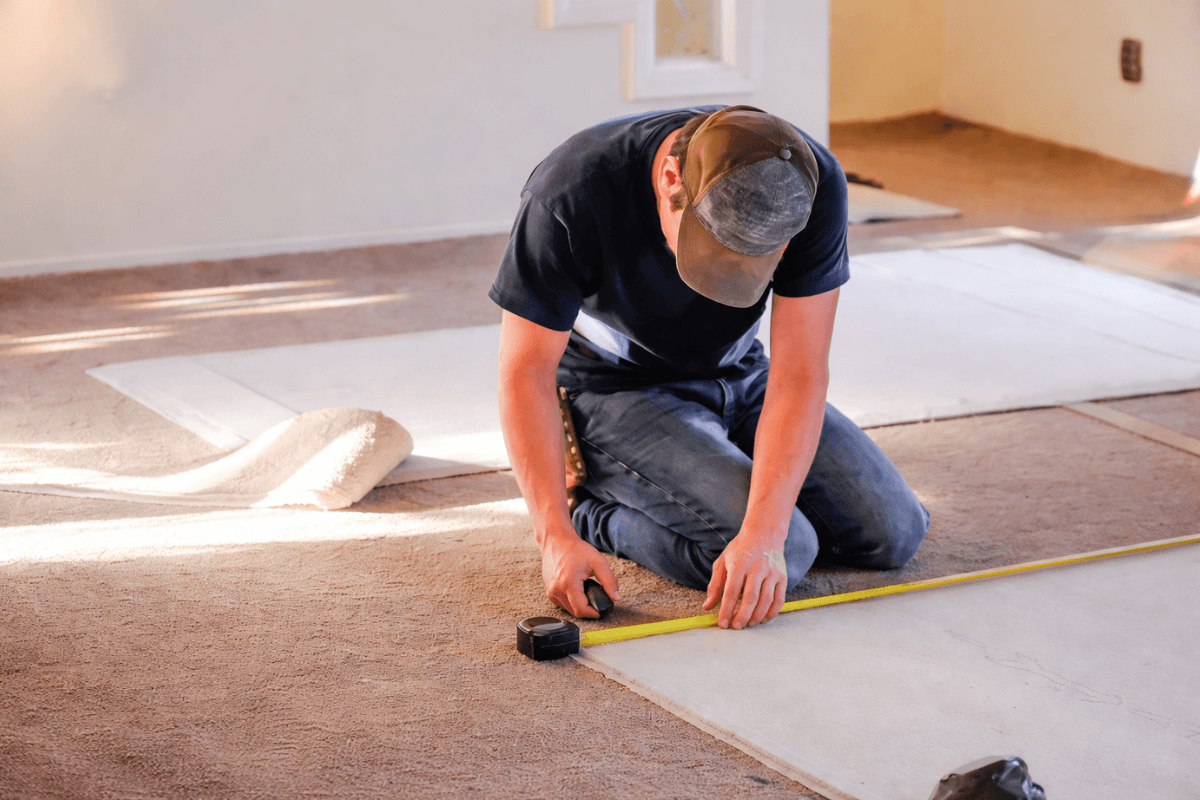
Reconstruction is the final stretch – rebuilding walls, replacing flooring, reinstalling cabinets, repairing electrical and plumbing systems, and finishing surfaces.
Depending on the building type, this phase may require architectural plans, DOB permits, and multiple inspections.
How Pricing Is Built
Fire restoration cost is rarely a one-line number because the work touches several trades and code requirements.
Estimators often look at:
Square-foot models for projects with predictable patterns (like smoke cleaning)
Line-item pricing for detailed scopes such as electrical repairs, plumbing replacement, and material rebuilds
Labor-hour models when the damage is irregular or access is difficult
In NYC specifically, mobilization and minimum service charges are a big part of the equation. Moving equipment into a sixth-floor walk-up or navigating freight elevator restrictions in a co-op adds hours before a crew even starts cleaning.
It’s also normal for additional damage to appear once walls or cabinets come down. These are handled through change orders, which adjust the estimate once the hidden damage is visible.
Line-Item Costs You Can Expect
Water Damage Restoration
Even a small fire usually involves water – from sprinklers or FDNY suppression. Drying out structures quickly prevents mold and long-term structural issues.
Typical NYC ranges: $1,500–$10,000+, depending on how far water traveled.
Smoke & Soot Cleaning
Deep cleaning runs $1,000–$6,000.
Plus $275+ if the HVAC needs a full cleaning. Severe smoke infiltration raises the bill because soot bonds to porous materials.
Odor Removal
Professional deodorization – thermal fogging, ozone, or hydroxyl treatment – usually falls between $500–$1,500 depending on square footage.
Debris Removal
Carting out charred materials costs $2,000–$5,000 for moderate jobs but can hit $10,000–$30,000 if multiple rooms are involved.
Structural Repairs
Replacing burned framing, drywall, ceilings, and flooring ranges widely from $4,500 to $20,000+, with full rebuilds exceeding $50,000.
Electrical rewiring adds another $2,000–$6,000.
Residential vs Commercial Pricing
Residential jobs tend to range between $4–$7 per square foot for standard cleanup and limited repair.
Once structural work enters the picture, costs move closer to $15–$16 per square foot.
Commercial fire restoration is often pricier because of:
Larger mechanical systems
More complex electrical infrastructure
Strict operational downtime requirements
Specialty materials and finishes
Commercial projects often start around $15–$20+ per square foot, especially in buildings requiring phased work to keep certain areas operational.
How Insurance Plays Into Costs
Most homeowners insurance policies cover:
Structural fire damage
Smoke and soot cleanup
Water damage from suppression
Debris removal
Temporary living expenses if the home is uninhabitable
Where homeowners get caught off guard is with code upgrades, particularly in NYC.
Electrical, plumbing, and life-safety systems often must be brought up to current standards, and not all policies include Ordinance & Law coverage.
Codes, Permits & Compliance
The moment structural, electrical, or plumbing work enters the picture, NYC requires permits. This means plan submissions, inspections, and approvals at multiple phases.
If more than 50% of the structure is affected, full code compliance may be triggered – new smoke detectors, new wiring, upgraded materials, and sometimes enhanced egress requirements. These upgrades can add several thousand dollars.
Historic buildings require even more oversight, sometimes mandating original material matching.
How To Control Costs Without Cutting Corners
The fastest way to control costs is to act quickly. Secondary damage (like mold and smoke penetration) grows more expensive if left for days.
Selective demolition also saves money – removing only what’s necessary instead of gutting entire rooms. Containment barriers help protect unaffected rooms and limit the cleaning scope.
Batching work, scheduling crews efficiently, and ensuring accurate documentation for insurance all help keep costs in line.
DIY vs Professional Restoration
DIY is only appropriate for light soot on non-porous surfaces. Anything involving structure, electrical systems, soaked materials, heavy smoke odor, or potential hazardous substances needs professional handling.
Incorrect DIY attempts often lead to lingering smoke smells or further damage that costs more to fix later.
Fire Damage Restoration Cost Calculator
Here’s a quick way to get a ballpark:
Total Cost ≈ (Square Footage × Severity Band) + Access Factor + Permits + Specialty Services
Severity bands (rough):
Minor: $4–$7/sf
Moderate: $7–$15/sf
Severe: $15+/sf
Permits, code upgrades, and debris removal typically add another 10–20%.
Need Pricing Based On Your Actual Damage?
On-site guidance, HAZWOPER crews & a 1-year labor warranty.
Frequently Asked Questions
Does the age of the building affect fire restoration costs?
Yes. Older NYC buildings often hide outdated wiring, brittle plumbing, or original materials that aren’t up to current code. Once repairs begin, these issues can trigger mandatory upgrades, which increases the total budget.
How long should I expect my apartment to be unlivable after a fire?
For smaller, contained fires, you may be out for a few days. Moderate to severe fires often require several weeks due to drying, demolition, and code inspections. Insurance “loss of use” coverage usually helps offset temporary housing costs.
Do fire restoration companies in NYC charge extra for co-op or condo work?
Not as a line item, but the conditions often drive higher costs: stricter working hours, board approvals, elevator reservations, and detailed COI requirements. All of that adds labor time, which naturally increases the estimate.
Conclusion
Fire damage restoration cost in NYC swings so widely because every element of a fire behaves differently: soot spreads everywhere, water travels behind walls, and the city adds its own layer of complexity.
A small, contained incident may come in around $3,000–$8,000, while multi-room fires with smoke and water damage often fall between $10,000–$30,000. Once structural repairs, code requirements, or full-apartment rebuilds enter the picture, it’s common to see $50,000+.
The real number comes down to how far the damage spread, how much needs to be removed and rebuilt, and how challenging the building is to work in – freight elevators, board approvals, tight hallways – all of it plays a role.
If you’ve had a fire, the best first step is a thorough assessment. We provide fast, clear estimates and handle the entire restoration process so you can focus on getting back to normal. Request a free quote whenever you're ready.